
 English
 Türkçe
 Русский
 Español
 Français
 Deutsch
 한국어
한국어
 中文
中文
 Български
 Indonesia
 Italiano
 日本語
日本語
 Português
 Svenska
 العربية



A short layover can feel easy. A long one in a city you do not know can feel like a risk. If you are asking, is it safe to have a layover in Istanbul, the honest answer is yes for most travelers - provided you handle the basics well: timing, transportation, airport awareness, and a realistic plan.
Istanbul is one of the world’s busiest air hubs, and millions of international passengers pass through it every year. For many travelers, the real question is not whether Istanbul is broadly safe, but whether leaving the airport during a layover is worth it and whether they can do it without adding stress before their next flight. That depends less on fear and more on logistics.
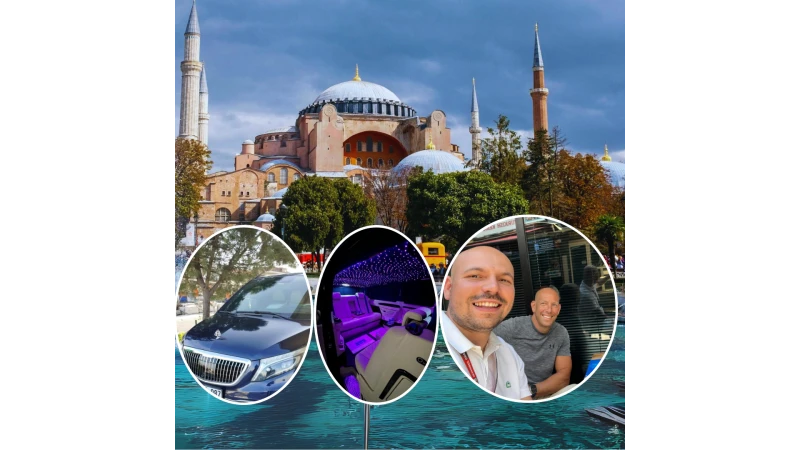
In practical terms, yes. Istanbul is a major global destination with modern airports, established tourism infrastructure, and heavily traveled visitor areas. Most layover travelers who stay alert, use reliable transportation, and allow enough buffer time have no issue at all.
That said, Istanbul is a very large city with serious traffic, busy transit points, and the usual risks that come with any major international destination. Petty scams, overcharging, confusion with taxis, and poor time management are more common concerns than personal danger for visitors on a layover. For time-sensitive travelers, the bigger risk is missing your onward flight because you underestimated airport procedures or road conditions.
If your stop is at Istanbul Airport, you are arriving at a well-connected international airport with strong security and a steady flow of foreign visitors. If your layover is at Sabiha Gokcen Airport on the Asian side, the safety question is similar, but the practical time needed to reach central sights can differ.
The most important factor is the length of your layover. If you have six hours total between flights, that does not mean six free hours in the city. You need time to deplane, clear passport control if required, possibly handle visa formalities depending on your nationality, travel into the city, return to the airport, pass security again, and reach your gate.
For many travelers, a layover under eight hours is usually better spent at the airport unless everything is very straightforward and your goal is modest. Once you reach nine to 12 hours, seeing part of the city becomes far more realistic. With a longer daytime layover, Istanbul can be a rewarding stop rather than a rushed gamble.
The second factor is whether you travel independently or with pre-arranged transportation. A private pickup with a clear itinerary reduces uncertainty. Trying to figure everything out on arrival can work, but it introduces delays that matter more in Istanbul than in smaller cities.
The third factor is your comfort level as a traveler. A frequent international flyer who is used to busy cities may be happy taking a controlled approach on their own. A family with children, a first-time visitor, or a business traveler who cannot afford a missed connection usually benefits from a more structured plan.
Not every layover should become a city visit. If your connection is short, late at night, or during a period when you are already exhausted, staying inside the airport may be the safer and smarter choice.
This is especially true if you are traveling with a lot of carry-on luggage, managing mobility concerns, or landing during peak traffic periods without a fixed transfer. The airport itself is often the lowest-risk option because it removes the biggest variable: moving across a city on a deadline.
You should also stay put if you are uncertain about your visa eligibility or transit rules. Safety includes administrative safety too. A missed document detail can turn a simple outing into a stressful situation very quickly.
Yes, it can be safe to leave the airport during a layover in Istanbul, but only if your schedule supports it. This is where many travelers make the wrong call. They focus on distance rather than total process time.
From Istanbul Airport, reaching central historic areas can take around 45 to 60 minutes in favorable traffic, and considerably longer when roads are congested. The return trip can be just as unpredictable. Add airport security lines and boarding cutoffs, and your margin can disappear fast.
A good rule is to build in a strong return buffer rather than aiming for the last possible minute. If your flight departs at 6:00 p.m., planning to arrive back at the airport at 5:00 p.m. may not be enough for an international departure. Safer travelers think backward from gate time, not takeoff time.
Most layover passengers are not worried about dramatic scenarios. They are usually asking about practical, real-world concerns.
Taxis are one of the biggest pain points. Many rides are perfectly fine, but misunderstandings over route choice, fare expectations, or communication can create unnecessary stress. If you are on a layover schedule, that stress matters. Pre-booked transportation is usually the more reliable option.
Crowded tourist areas also require normal city awareness. Keep your phone secure, watch your wallet, and be cautious if a stranger tries to pull you into an overly friendly conversation with an obvious sales angle. None of this is unusual by global city standards, but it is worth respecting.
Solo travelers, including women traveling alone, generally move through Istanbul without issue in main visitor areas, airports, hotels, and established sightseeing districts. As in any major city, the safest approach is to stay in well-trafficked places, use reputable transport, and avoid improvising late at night in unfamiliar neighborhoods.
If your goal is to see Istanbul without worrying about every minute, the safest setup is simple: a private airport transfer, a realistic sightseeing window, and a guaranteed return plan. That removes the most common sources of layover stress - getting lost, waiting for transport, and misjudging traffic.
This is why many time-conscious travelers choose a private layover tour instead of building their own route. The value is not just convenience. It is operational control. A licensed local provider understands airport timing, route planning, and how much can actually fit into a limited stop.
For travelers who want to make the most of a long connection, Eternal Wonder Tours provides exactly that kind of structured option, with private guidance, airport pickup, and a clear focus on on-time return. For many visitors, that turns Istanbul from a question mark into a very manageable stop.
There is no single perfect number, but there is a practical range. If you want a calm visit to the old city, a meal, and a few major sights, 9 to 12 hours is usually the minimum that feels comfortable. More is better.
With less time, your safest version of “seeing Istanbul” may mean choosing one area only, staying close to a transfer route, and resisting the urge to pack in too much. The mistake is trying to treat a layover like a full-day city tour.
Long overnight layovers are different. They can still be safe, but the city experience changes. Some attractions may be closed, traffic patterns shift, and traveler fatigue becomes a real factor. In those cases, an airport hotel or a simple transfer plan may be the better use of time.

Before leaving the airport, confirm your visa status, baggage situation, and terminal requirements for your next flight. Make sure you know whether your luggage is checked through or whether you need to collect and recheck it. That one detail changes everything.
Also check the day and time of your layover. A Sunday morning and a weekday rush hour do not move the same way in Istanbul. Local conditions matter more than map estimates.
And be honest about your travel style. Some people enjoy squeezing adventure into every stop. Others want certainty. Neither is wrong, but only one of those approaches fits a tight layover well.
Istanbul is not a city to fear. It is a city to plan for. If you give yourself enough time, use reliable transportation, and avoid ambitious scheduling, a layover here can be not only safe but genuinely memorable. The best choice is the one that lets you enjoy the hours you have without spending the whole time watching the clock.










 info@eternalwondertours.com
 +90 5357094145