
 English
 Türkçe
 Русский
 Español
 Français
 Deutsch
 한국어
한국어
 中文
中文
 Български
 Indonesia
 Italiano
 日本語
日本語
 Português
 Svenska
 العربية


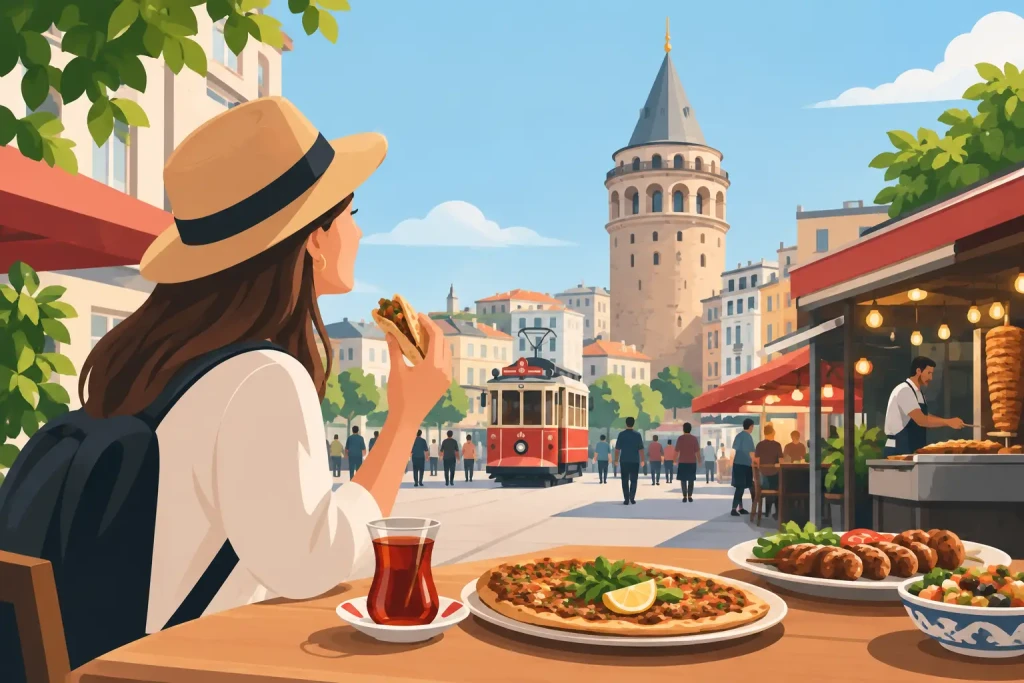
The smell of roasted chestnuts outside Taksim Square, the morning clatter of tea glasses on Istiklal Street, and a warm pastry handed across a small counter are all part of the neighborhood’s appeal. A food tour Taksim guide is most useful when it does more than name dishes: it helps you use limited time well, avoid tourist traps, and understand where each stop fits into your Istanbul schedule.
Taksim and the wider Beyoğlu district are a practical base for visitors staying near central hotels, arriving from Galataport, or planning a short city visit. The area has excellent variety, from century-old dessert shops and casual street food to refined Turkish cooking. It is busy, however, and the best meal is not always on the most crowded street. A well-paced route makes the difference.
Taksim is not Istanbul’s only food neighborhood, nor is it necessarily the best choice for every cuisine. Kadıköy on the Asian side offers a different market atmosphere, while the historic peninsula is better suited to a day centered on major landmarks. But Taksim works especially well for travelers who want a concentrated food experience without losing time to long transfers.
From Taksim Square, Istiklal Street runs through Beyoğlu toward Galata, passing bakeries, meyhanes, coffeehouses, snack counters, and side streets with much stronger local character than the main avenue. This gives a private guide room to adjust the experience. If a family prefers a slower lunch and fewer tastings, the route can be shortened. If you are a couple interested in Turkish sweets, regional cheeses, and coffee culture, it can move beyond the obvious kebab stops.
The trade-off is foot traffic. Istiklal Street can be packed in the late afternoon and evening, particularly on weekends. For a more comfortable experience, start in the late morning or schedule an early afternoon route, then finish before the dinner rush. Visitors with mobility concerns should also know that Beyoğlu includes cobbled lanes, slopes, and occasional stairs.
A good tasting route should build gradually rather than serve heavy dishes back-to-back. Turkish food is regional and seasonal, so exact items vary by venue and time of year. Still, these are the flavors worth looking for in and around Taksim.
If your tour begins before noon, Turkish breakfast offers an inviting introduction. Expect cheeses, olives, tomatoes, cucumbers, eggs, jams, honey with clotted cream, and freshly baked bread. It is generous, so it works best when shared and followed by lighter stops.
For a faster start, try simit, the sesame-coated bread ring sold from carts and bakeries, or a warm poğaça filled with cheese, potato, or olives. These are simple foods, but freshness matters. A guide who knows which bakery has just brought out a new tray can turn a quick bite into a memorable first stop.
Döner and kebab are familiar names, but their quality varies widely. Look for places that prepare meat carefully, serve it promptly, and have a focused menu rather than an oversized display of every possible dish. Lahmacun, a thin crisp flatbread topped with seasoned minced meat, is another excellent choice when eaten hot with parsley, onion, and lemon.
For a lighter savory tasting, consider içli köfte, a crisp bulgur shell filled with spiced meat and nuts, or stuffed mussels served with lemon. Seafood requires extra judgment: choose busy, reputable establishments and avoid samples that have been sitting out for long periods. A licensed local guide can recommend dependable stops and adapt the route if a preferred venue is unusually crowded.
Beyoğlu has a long dessert tradition. Baklava is the best-known choice, but it is only one part of the story. Try sütlaç, a baked rice pudding; lokma, small syrup-soaked dough bites; or Turkish delight in flavors such as rose, pomegranate, pistachio, or mastic.
Turkish coffee is prepared unfiltered and served in a small cup, so it has a fuller texture than drip coffee. If you prefer tea, order çay, the strong black tea served in tulip-shaped glasses. Neither needs to be rushed. In Istanbul, a tea stop is often where the conversation, neighborhood history, and people-watching become part of the experience.
The most effective routes do not try to cover all of Beyoğlu on foot. Begin near Taksim Square with a light pastry or breakfast tasting, then walk down Istiklal Street while your guide explains the area’s changing character. Rather than eating at every stop, use the avenue as an orientation point and turn into side streets for the more distinctive venues.
A route might continue toward the Çiçek Pasajı area for small plates and traditional restaurant culture, then move through quieter lanes toward Galatasaray or Cihangir for a more relaxed food stop. Depending on your pace, it can finish near Galata with dessert and coffee, or return toward Taksim for an easy transfer back to your hotel.
Plan on three to four hours for a satisfying experience. That allows for four or five meaningful tastings, short walks, and time to sit down where it counts. A rushed 90-minute route can be enjoyable for a layover, but it should focus on two or three excellent foods rather than attempt a full meal, dessert, and market visit all at once.
If you are arriving by cruise ship or have a flight to catch, build a clear buffer around the tour. Istanbul traffic can change quickly, especially during weekday rush hours and around major events. Private transportation is particularly valuable when a food walk is combined with an airport, hotel, or port transfer, because it removes the uncertainty of finding a taxi after a long meal or during rain.
Food tours vary more than their descriptions suggest. A small-group walk may be a good value for travelers with a flexible day and an interest in meeting other visitors. A private experience is often the better choice for families, couples, business travelers, and guests with fixed flight or cruise schedules. You control the pace, the meeting point, and the balance between food, sightseeing, and transportation.
Before booking, confirm the tour duration, neighborhood coverage, what tastings are included, and whether drinks are included. Ask how dietary needs are handled. Vegetarian, pescatarian, halal, gluten-aware, and nut-sensitive travelers can eat well in Istanbul, but advance notice is essential. Cross-contact can occur in busy kitchens, and gluten-free options may be limited at traditional bakeries.
Also be realistic about appetite. Turkish hospitality is generous, and a tasting tour can easily replace lunch or dinner. If you have a reservation at a fine-dining restaurant later that evening, request smaller portions or choose a morning route. Children may prefer a route with simit, börek, grilled meat, sweet treats, and a shorter walking distance.
Carry a little Turkish lira for small purchases, even though many established restaurants accept cards. Your guide can help with local customs, but a few basics are useful: tap water is not generally served automatically, bread may arrive before the meal, and tea is often offered as a gesture of hospitality. Tipping is appreciated for good service, though the amount depends on the venue and whether a service charge is already included.
Comfortable shoes matter more than most visitors expect. The most rewarding stops are often a short walk off the main street. Bring a light layer in cooler months and an umbrella during wet weather, since a food tour is far more enjoyable when you are prepared to pause outdoors between tastings.
Avoid choosing restaurants solely because someone approaches you outside with a menu. The most polished invitation is not always a sign of the best kitchen. Look instead for a clear specialty, steady local custom, clean preparation, and a menu that matches the restaurant’s strengths.
The best food tour Taksim experience is not a checklist of dishes. It is a way to understand why a tea glass, a bakery counter, or a family-run restaurant matters to the people who use it every day. With a licensed guide, flexible pacing, and reliable transportation when time is tight, Eternal Wonder Tours can shape that experience around your arrival, departure, and appetite.
Leave room for one unplanned stop. In Taksim, the pastry coming out of the oven, the seasonal dessert in a display case, or the café your guide notices on a quieter side street may be the taste you remember long after the trip ends.










 info@eternalwondertours.com
 +90 5357094145