
 English
 Türkçe
 Русский
 Español
 Français
 Deutsch
 한국어
한국어
 中文
中文
 Български
 हिन्दी
 Indonesia
 Italiano
 日本語
日本語
 Melayu
 Português
 Svenska
 العربية


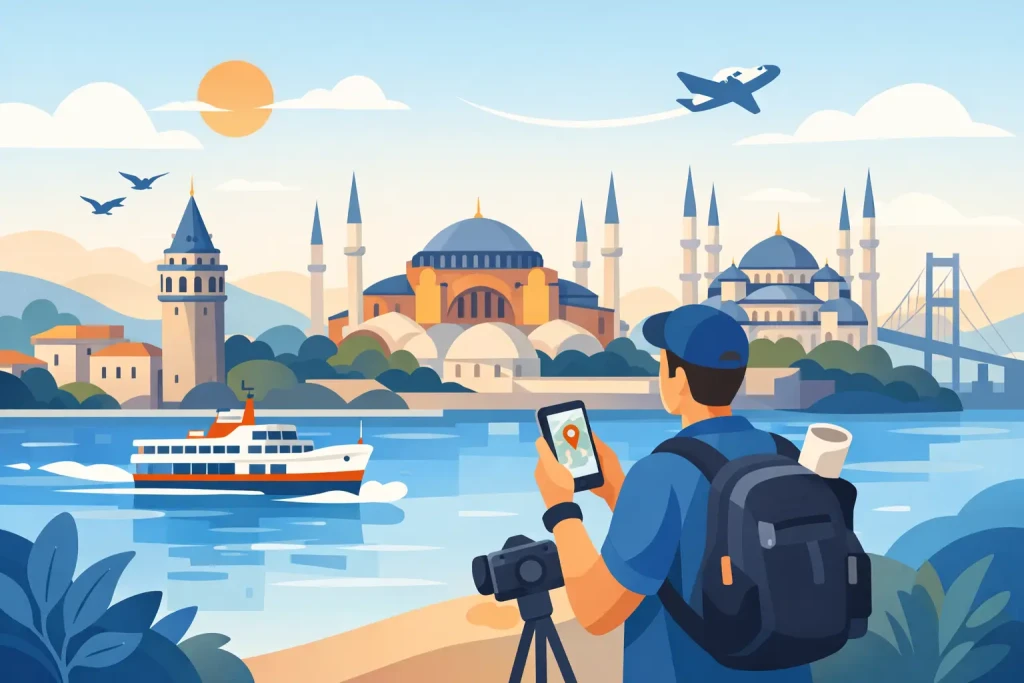
Istanbul can turn a six-hour sightseeing window into a stressful day if you treat it like a city of straight lines. The Bosphorus, steep hills, ferry routes, security lines, and traffic all shape the clock. Knowing how to tour Istanbul efficiently means grouping sights by neighborhood, protecting your return time, and leaving room for the moments that make the city memorable.
For travelers arriving on a cruise, during a layover, or for only one full day, the goal is not to check off every famous landmark. It is to see the right places in the right order with a plan that does not depend on perfect traffic or a last-minute taxi.
Build your itinerary backward from your flight departure, cruise all-aboard time, or hotel appointment. This is the most practical decision you can make in Istanbul. Airport journeys can be long, especially during weekday rush periods, while the drive from Galataport to the historic peninsula is shorter but still affected by central-city congestion.
For an international flight, plan to arrive at the airport well before departure based on your airline's requirements. Add a realistic road buffer rather than assuming the map's fastest estimate will hold. Cruise guests should treat the ship's all-aboard time as non-negotiable, not as the moment to begin returning to the port.
A private itinerary works best when the guide and driver know that deadline from the first pickup. It lets them adjust the route if traffic builds, a museum line slows, or you decide to spend longer at a site. A good day in Istanbul should feel unhurried, even when the schedule is carefully managed.
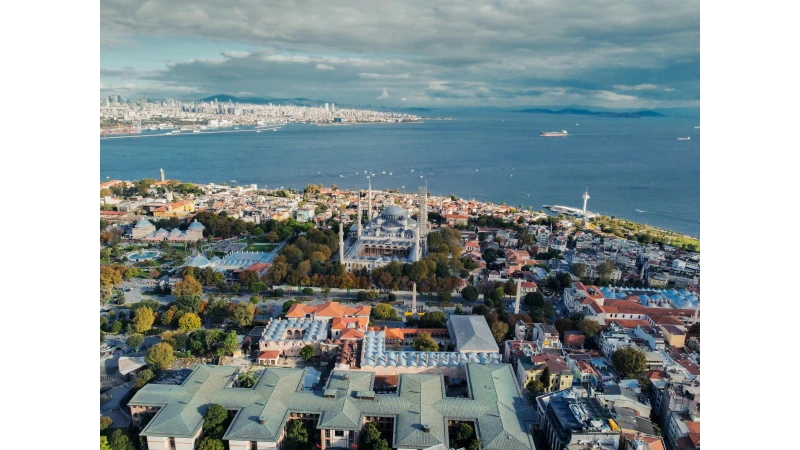
The historic peninsula, often called Sultanahmet, is the best starting point for most first-time visitors. Hagia Sophia, the Blue Mosque, Basilica Cistern, Topkapi Palace, and the Hippodrome are within the same general area. Trying to combine them with a Bosphorus cruise, a full Asian-side visit, and a lengthy shopping stop in one short day usually creates more time in transit than time enjoying the city.
Choose one main district for each portion of the day. A strong full-day route might begin in Sultanahmet, continue toward Eminonu for the Spice Market and waterfront views, then cross to Karakoy, Galata, or Taksim later in the afternoon. This route follows the city geographically instead of zigzagging between landmarks.
If you have only four to six hours, stay focused on the Old City. You can still experience Istanbul's defining layers: Byzantine architecture, Ottoman imperial history, active mosque life, and the energy of the streets around the Grand Bazaar. If you have eight hours or more, add a Bosphorus cruise or a carefully timed drive through another neighborhood, but do not overfill the plan.
Topkapi Palace can take several hours if you want to explore its courtyards, collections, and Harem section properly. Hagia Sophia is visually extraordinary but may be a shorter visit depending on current visitor access and prayer activity. The Basilica Cistern is compact yet can have entry lines. The Grand Bazaar is best enjoyed with a clear purpose, because its scale can easily absorb an afternoon.
Before the day begins, decide which experience matters most. History-focused travelers may give more time to Topkapi Palace. Families may prefer the cistern and a relaxed waterfront stop. Travelers who want iconic photographs may prioritize the exterior views around Hagia Sophia and the Blue Mosque early in the day. One meaningful priority makes the rest of the itinerary easier to shape.
Early morning is valuable in Istanbul. Starting before the busiest sightseeing period can mean cooler streets, better photos, and shorter waits at major attractions. It also creates flexibility later, when traffic and crowds tend to increase.
Mosques are living places of worship, not simply monuments. Visitor access can change around prayer times, particularly on Fridays and religious holidays. Dress modestly, carry a scarf if needed, and be prepared to adjust the order of visits. A licensed local guide can make this adjustment quickly, shifting to a nearby museum, cistern, market, or viewpoint rather than leaving you waiting outside.
Museum entry rules, ticketing procedures, and opening hours can also change. Confirm current access close to your visit, particularly if a specific palace, museum section, or religious site is central to your plans. Efficiency is not about rushing through a fixed list. It is about having a route that still works when conditions change.
Walking is often the fastest way to move between nearby Old City landmarks. It is also the best way to notice tiled courtyards, small shops, street-food stands, and views that disappear from a vehicle. But Istanbul is large, hilly, and divided by water. Walking every leg is not automatically efficient, especially after a long flight or before a cruise departure.
Private transportation is especially useful for airport arrivals, port pickups, hotel transfers, and longer moves between districts. It removes the uncertainty of finding a taxi, explaining your destination, managing luggage, and estimating the return journey. For families, older travelers, and guests carrying shopping bags or cabin luggage, that comfort also preserves energy for sightseeing.
Public ferries can be a beautiful and practical choice when they fit the route and timing. They offer an authentic view of the Bosphorus and can avoid road traffic, but they are not always ideal for a time-sensitive itinerary. You must account for boarding, schedules, weather, and the walk at each end. Use a ferry because it improves the experience and the route, not just because it looks good on a map.
A long sit-down lunch in the middle of a short tour can cost more than an hour once walking, ordering, and service are included. For a limited visit, consider a planned quick lunch near your next stop, then save a more leisurely meal for the end of the day if your schedule allows.
The same rule applies to shopping. The Grand Bazaar, Spice Market, and local boutiques are enjoyable, but they work best with a time limit. Tell your guide whether you are looking for ceramics, textiles, spices, jewelry, Turkish delight, or simply a quick look. Clear preferences prevent a casual browsing stop from consuming the time reserved for a landmark you may never see again.
You should also leave some room for a simple pleasure: Turkish coffee with a view, a warm simit from a street vendor, or a few quiet minutes beside the Bosphorus. A tightly organized day does not need to feel mechanical.
A private guided tour is not necessary for every visitor, but it is often the most efficient option when your time has a hard endpoint. The advantage is not only private transportation. It is the ability to set the pickup location, pace, interests, meal timing, and return deadline around your actual travel plans.
This matters most for layover tours and shore excursions. A guide who knows the city can make practical decisions in real time: use a different bridge, reverse the route, skip a crowded stop, or shorten a market visit to protect your airport or ship return. That local judgment is difficult to recreate with a self-guided itinerary assembled from separate maps, tickets, and transport bookings.
When comparing providers, ask direct questions about pickup, drop-off, admission costs, vehicle type, guide licensing, and return timing. Look for clear pricing and written confirmation rather than vague promises. Eternal Wonder Tours, for example, builds private Istanbul experiences around flexible scheduling, transportation, licensed guidance, and dependable airport or port returns.
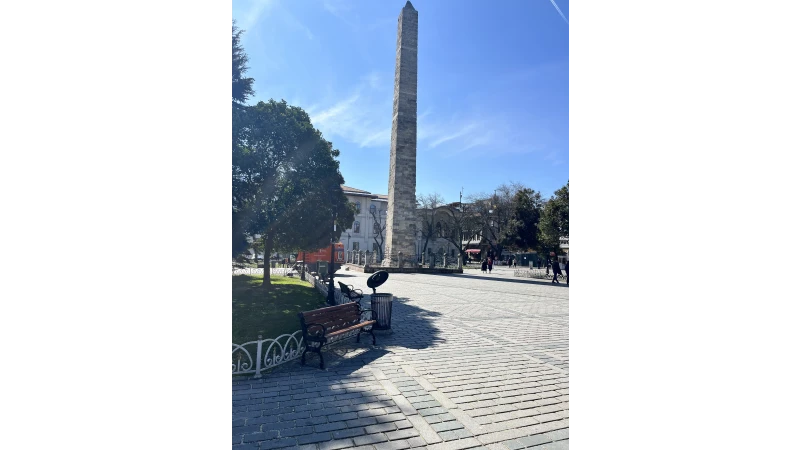
For a first visit with roughly eight hours in the city, begin with pickup and an early arrival in Sultanahmet. See the Hippodrome area, Hagia Sophia, and the Blue Mosque according to current access conditions. Continue to the Basilica Cistern or Topkapi Palace based on your interests and available time, then take lunch near Eminonu or the waterfront.
In the afternoon, choose one direction: the Spice Market and a Bosphorus experience, or Karakoy and Galata for neighborhood atmosphere and panoramic city views. Finish with enough time to return calmly to your port, hotel, or airport. This approach covers Istanbul's essential character without betting your departure on a perfect day of traffic.
The most rewarding Istanbul itinerary is one that leaves you with time to look up. Plan the route carefully, protect the return, and let a few unplanned street scenes become part of the day.











 info@eternalwondertours.com
 +90 5357094145