
 English
 Türkçe
 Русский
 Español
 Français
 Deutsch
 한국어
 中文
 Български
 हिन्दी
 Indonesia
 Italiano
 日本語
 Melayu
 Português
 Svenska
 العربية



The T1 tram can take you from the historic heart of Sultanahmet toward the Galata Bridge, Eminonu, Kabatas, and beyond without the uncertainty of Istanbul traffic. Knowing how to use Istanbul trams is one of the simplest ways to make a self-guided day more efficient, especially if you are staying near the Old City or arriving with limited time.
For visitors, the system is generally safe, affordable, and easy once you understand the payment card, station signs, and a few key transfer points. The main trade-off is that trams can become very busy at commuting hours and on weekends, so they are not always the best choice when you have luggage, a cruise departure, or a fixed flight schedule.
Istanbul has several tram lines, but the T1 Bağcılar-Kabataş line is the one most travelers mean when they talk about Istanbul trams. It connects many of the city’s most visited areas on the European side.
Useful T1 stops include Sultanahmet for Hagia Sophia, the Blue Mosque, Basilica Cistern, and Topkapi Palace; Gülhane for the edge of Gülhane Park; Eminonu for the Spice Market, ferry piers, and Galata Bridge; Karakoy for the waterfront and access toward Galata; and Kabatas for connections to the Taksim funicular and Bosphorus-side areas.
The T1 is particularly practical if your hotel is in Sultanahmet, Sirkeci, Laleli, or Beyazit. It is less useful for destinations that are farther uphill, across the Bosphorus, or on the Asian side. Istanbul is large, and a map may make two locations look close even when steep streets or traffic make the journey longer than expected.
At each platform, look for the final destination shown on the tram and station signs. On the T1, travelers in Sultanahmet usually take a tram marked Kabataş to travel toward Eminonu, Karakoy, and Kabatas. For the return journey toward Laleli, Aksaray, or Bağcılar, board in the opposite direction.

You need an Istanbulkart, the reloadable public transportation card used for trams, metro lines, ferries, buses, funiculars, and many other city services. One card can be passed between travelers in many situations, although each person must tap separately to pay their own fare. For a family or couple, having more than one card can be more convenient during busy boarding periods.
Buy and reload the card at official machines near major tram stations, metro stations, ferry terminals, and airports. Machines commonly offer language options, though it is wise to carry smaller Turkish lira notes or use a card where accepted. Keep your Istanbulkart accessible rather than packing it away in a wallet or bag.
To enter, hold the card against the reader at the station gate. A light and sound indicate that the fare has been deducted. You do not tap again when leaving the tram. This differs from some subway systems in the United States, so first-time visitors sometimes wait for an exit gate that does not exist.
Fares and transfer rules can change, and there may be different charges depending on the service or route. Check the amount displayed by the reader and keep a reasonable balance on your card. Reload before the card is almost empty, particularly if you are traveling early in the morning, late at night, or with children who may not enjoy an unexpected stop at a ticket machine.
T1 stations are typically raised platforms with barriers or gates. Once inside, stand behind the safety line and let passengers exit before boarding. Trams arrive frequently during normal daytime hours, but service intervals can vary with the time of day, maintenance work, weather, and crowd levels.
Inside, route maps and stop announcements are available, but they can be difficult to follow when the carriage is crowded. Use your phone’s offline map or note the number of stops before you board. If you are headed to Sultanahmet, for example, prepare to leave as the tram approaches rather than trying to reach the door at the last second.
Priority seating is intended for older passengers, pregnant passengers, and travelers with disabilities. If you are standing, hold a rail firmly. Istanbul trams make frequent stops, and the movement can be abrupt when the car is full.
Pickpocketing is not a reason to avoid public transportation, but common-sense precautions matter in crowded spaces. Keep phones, passports, and wallets in a secure front pocket or zipped bag. Avoid leaving a handbag open while concentrating on the route map or taking photos through the window.
Weekday morning and evening commutes can be packed, especially around Eminonu, Sirkeci, and Sultanahmet. Midday is often more comfortable, though tourist-heavy stops remain active throughout the year. During major holidays, school breaks, or special events, allow extra time even outside normal rush hour.
If you are traveling with large suitcases, a stroller, or several shopping bags, the tram may feel more difficult than it appears on a map. Stations have varying elevator and escalator access, and platforms can be crowded. A private transfer is usually the more comfortable option for an airport arrival, cruise embarkation, or hotel change.
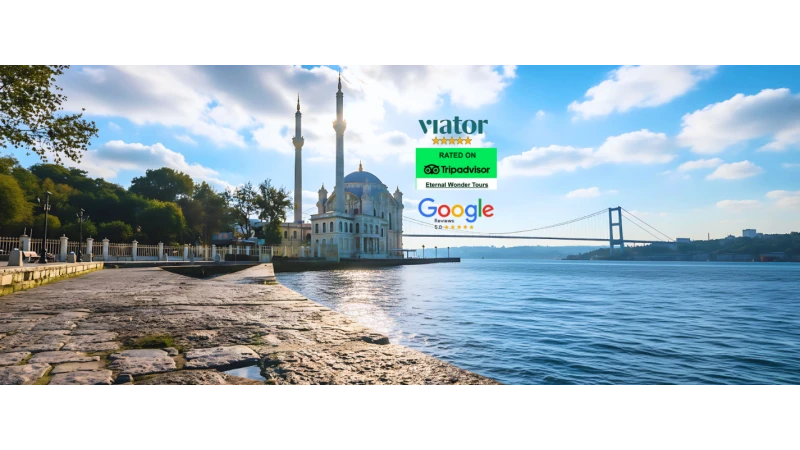
The T1 works best when paired with other forms of transportation. At Eminonu, you can walk to ferry terminals for trips along the Bosphorus or across to the Asian side. At Karakoy, you can connect toward the historic Galata area, although the uphill walk requires comfortable shoes. At Kabatas, the F1 funicular provides a quick connection uphill to Taksim Square.
For travelers staying near Taksim, the funicular-to-tram combination can be faster than a taxi during congested periods. For travelers headed to the Asian side, a tram and ferry can be a memorable and efficient option if there is no time pressure. It depends on your exact destination, weather, mobility needs, and confidence making transfers.
Do not confuse the nostalgic red tram on Istiklal Street with the T1 public tram. The Istiklal tram is a short heritage-style service and a pleasant sight, but it is not designed as a practical way to cross the city. The T1 is the line that serves most Old City sightseeing needs.
Public transit is excellent for flexible sightseeing, but it cannot guarantee door-to-door timing. If you have a cruise ship departure from Galataport, an international flight, a layover with a limited return window, or timed museum reservations, build in a generous buffer. Road traffic, station crowds, a missed connection, and a long walk from the final stop can all affect your schedule.
A licensed private guide and vehicle can be a better fit when your day includes several neighborhoods, family members with limited mobility, or a firm return deadline. Eternal Wonder Tours can arrange tailored sightseeing with private transportation for travelers who want Istanbul’s major sights without managing transfers, crowds, and timing on their own.
For an independent day, however, the tram remains a smart choice: load your Istanbulkart, confirm the direction, keep your valuables secure, and allow more time than the route planner suggests. That small margin turns a crowded city commute into an enjoyable part of seeing Istanbul.











 info@eternalwondertours.com
 +90 5357094145
