USD
TRYEURAEDCADCNYJPYBGNGBPRUB
English
Türkçe
Русский
Español
Français
Deutsch
中文
Български
Indonesia
Italiano
日本語
Português
Svenska
العربية
Who are We? | Why Choose Us?Who We ArePrivate Istanbul Layover Tours | Licensed Guided with Private Airport TransfersPrivate Istanbul Tours & Guided ActivitiesPrivate Istanbul Shore Excursions | Galataport Private ToursTours and ActivitiesTell Us About Your Travel PlansBlogsContact
The Lost Empire Beneath Istanbul – The Last Days of Byzantium
Most travelers walk through Istanbul without realizing what lies just under their feet.
Every stone, every wall, every hidden arch tells the story of a world that once ruled everything — Byzantium, the last breath of the Roman Empire.
This wasn’t just another capital.
It was the heart of a civilization that refused to die — that carried Rome’s soul long after the West fell silent.
If you walk with a local guide who knows where to look, you’ll still find it.
The mosaics that once glowed like sunrise.
The walls that stood for a thousand years.
The churches that whispered prayers in Greek and Latin.
And when you stand there, between past and present, you realize something simple but powerful —
Rome never really fell. It just moved here.
From Constantine’s Dream to the Eternal City
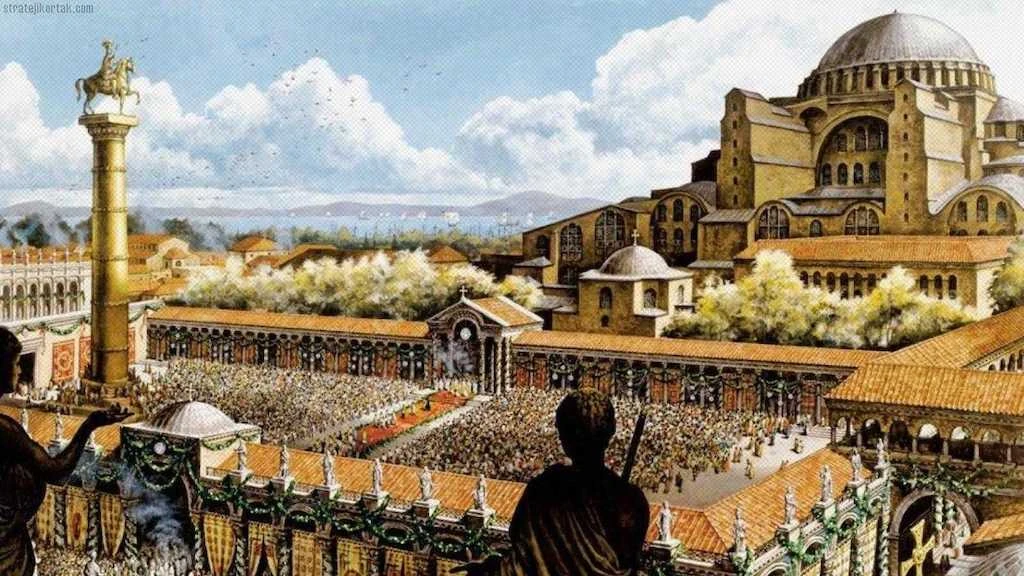
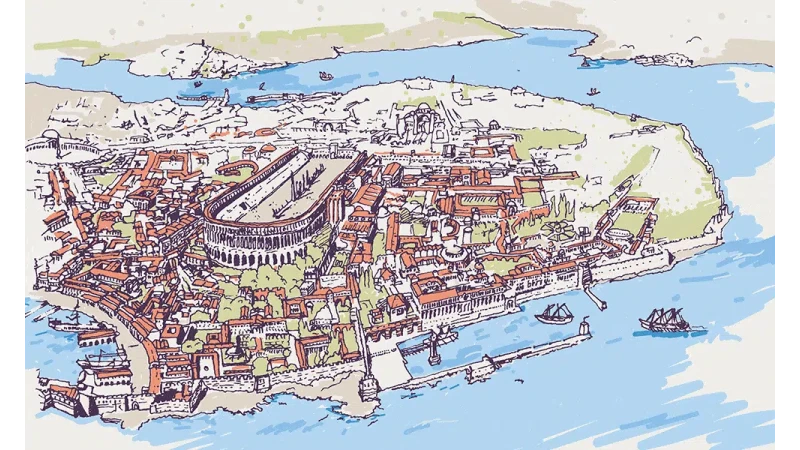
In 330 AD, Emperor Constantine the Great chose a tiny Greek colony called Byzantion to be his new capital.
He called it Nova Roma — New Rome — but everyone soon began calling it Constantinople.
From this city, emperors ruled lands that stretched across three continents.
They built marble palaces, vast cisterns, golden churches, and massive gates that could stop the world.
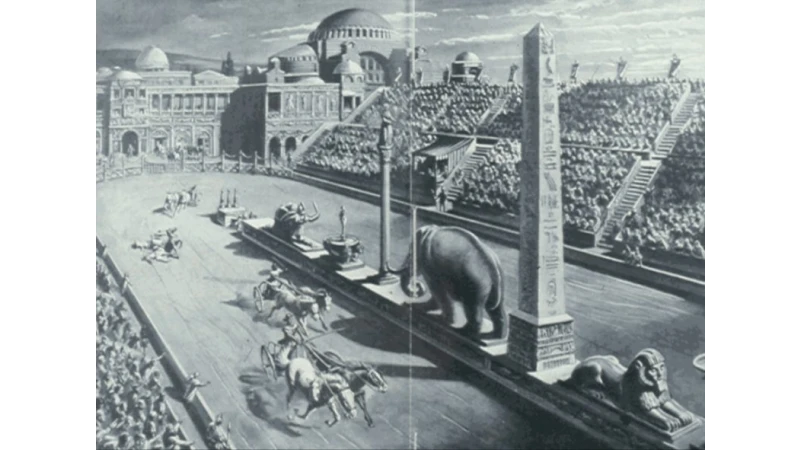
Even today, you can walk those same streets — from the Hippodrome to Hagia Sophia — and still feel the hum of power that once echoed through the stones.
The Walls That Couldn’t Be Broken
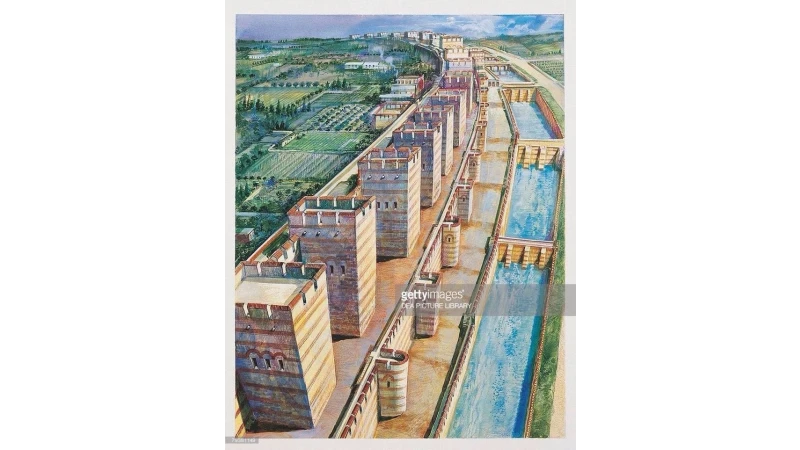
The Theodosian Walls still stand, scars and all.
They were built in the 5th century and held strong for more than 1,000 years.
No army could break them — Persians, Arabs, Crusaders, earthquakes — all failed.
Until one dawn in 1453, when Mehmet the Conqueror brought new weapons: cannons.
Even then, it took 53 days of battle to break through.
When Constantinople fell, the Middle Ages ended. But Byzantium’s story didn’t.
Because even the conquerors respected what they had taken — an empire built not just on power, but on soul.
Faith Written in Gold and Light
Step inside Hagia Sophia or Chora Church, and you’ll understand why the empire lasted so long.
They believed beauty itself was a form of worship.
Tiny glass mosaics shimmer across domes and arches, showing Christ, Mary, saints, and angels in pure gold.
Every piece was placed by hand — every light reflection meant to remind people of heaven.
Even now, hundreds of years later, you can feel that same glow.
It’s art that outlived empire, war, and time itself.
The Fall That Changed the World
On May 29, 1453, the city finally fell to the Ottomans.
The last emperor, Constantine XI, fought on the walls until the very end — sword in hand, a Roman to his last breath.
But Byzantium didn’t die that day.
Its art, its law, its architecture, even its ceremonies — all became part of what we now call Istanbul.
The new empire didn’t erase the old one. It carried it forward.
That’s why Istanbul still feels unique — a living bridge between East and West, past and present.
Traveler’s Voice
“I never realized how Roman Istanbul really was until this tour. Walking the walls with our guide felt like stepping into a different world. You can literally feel history under your feet.”
— David & Lisa, 🇺🇸 USA
Why Explore Byzantium with Eternal Wonder Tours
Licensed guides who bring history to life with real stories.
Private routes through Hagia Sophia, Chora Church, and the City Walls.